
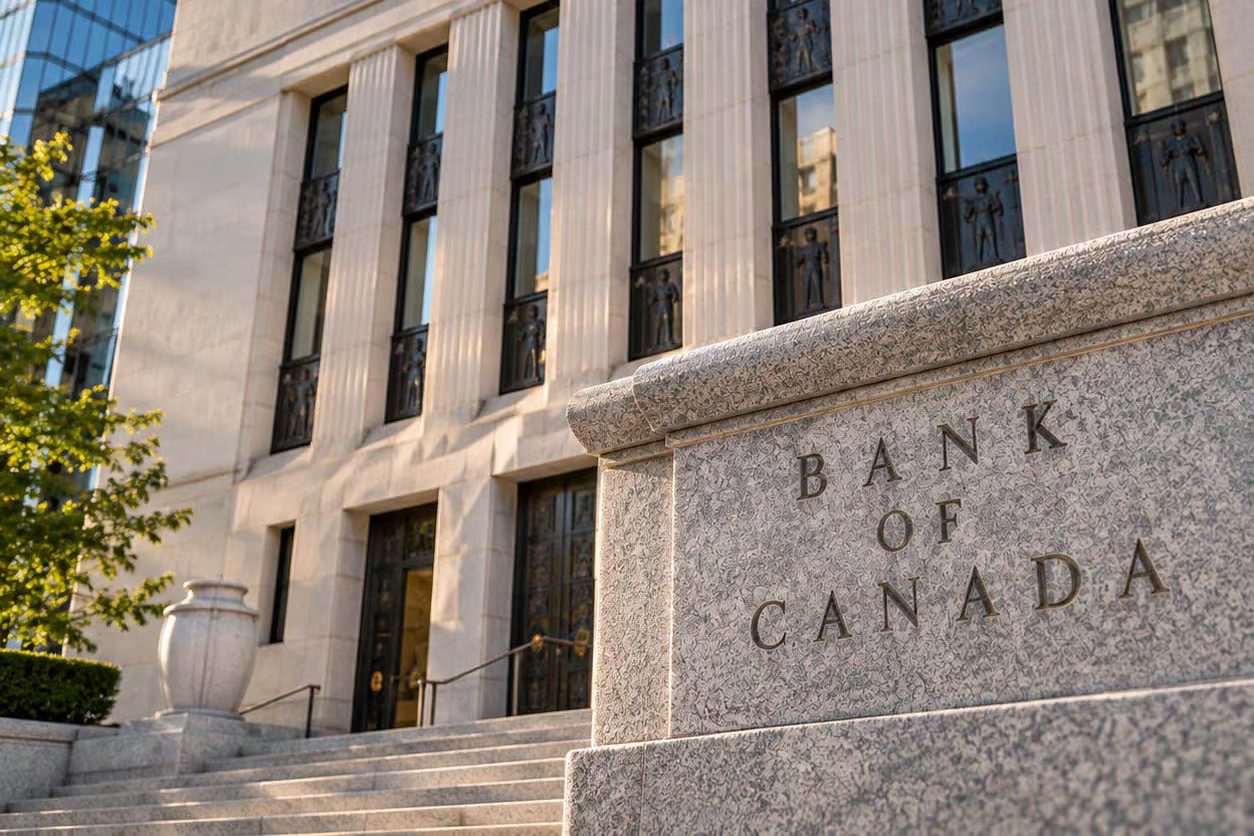
On Wednesday, October 28, the Bank of Canada raised its policy rate for the first time in more than three years. It’s a headline that sounds bigger than it is for most Ontario buyers and homeowners.
Here’s what changed, why it matters less than you might think, and where the opportunity sits.
The 30-Second Version
- The Bank raised its target for the overnight rate by 25 basis points to 2.5%, its first increase since July 2023.
- The rate had held at 2.25% since the October 2025 cut.
- The trigger was energy prices, not an overheated economy. The Bank moved to keep high energy costs from spreading into the prices of other goods and services.
- Next decision: December 9, 2026.
Why the Bank Moved
Inflation has drifted above target. Consumer prices rose 3.1% year over year in September, with energy up 19.0% and gasoline up 27.8%. Excluding gasoline, inflation was 2.2%. In other words, the pressure is concentrated at the pump, and the Bank wants to stop it from spreading.
The Bank was clear it may not be done. It signalled that further increases could be needed, but that it would proceed carefully given the uncertainty.
Four Reasons This Isn’t as Scary as It Sounds
1. Fixed rates already saw it coming. Fixed mortgage rates aren’t directly set by Bank of Canada decisions, and bond markets had largely priced this move in ahead of time. According to Ratehub.ca, the best 5-year fixed rate stood at 4.34% on announcement day — meaning today’s hike changes very little for buyers choosing a fixed rate.
2. Rates are still low by historical standards. Even after the increase, the policy rate remains below the neutral rate — the level considered neither restrictive nor stimulative.
3. The economy is sturdier than expected. The Bank now sees growth this year at 1.0%, up from the 0.7% it projected in July. A rate hike driven by resilience is a very different signal from one driven by a crisis.
4. Savers get a small raise. Returns on GICs and high-interest savings accounts should rise after the hike — welcome news for anyone building a down payment.
Toronto in a Soundbite
The GTA was already a buyer’s market before the announcement. According to TRREB, September sales were 5,040, down 9.0% from a year ago, and the average price was $1,006,409, down 5.1%. At the same time, new listings fell 14.4% to 16,500, so supply is tightening even as demand is quiet.
What this means: Buyers who are ready now face less competition and softer prices than a year ago. Because new listings are thinning, prepared sellers with well-priced homes may find they face fewer competing listings than in recent months.
Ottawa in a Soundbite
Ottawa is the steadier of the two. According to OREB, September sales totalled 1,010, down 6.6% from a year earlier, while the average price was $685,640, down just 1.0% and nearly unchanged from August. Choice is up: active listings reached 4,813, up 7.9% year over year, and months of inventory hit the highest September level of the past decade.
What this means: Ottawa buyers have more selection and more negotiating room than they’ve had in years, with prices holding remarkably stable. The average price stayed within less than 1% from July through September — the kind of predictability that rewards a careful, well-timed purchase.
Who Comes Out Ahead Right Now
Pre-Approved and First-Time Buyers
If you’ve been outbid before, this is a very different market. Fewer buyers are active, prices are softer in Toronto and stable in Ottawa, and fixed rates were largely unaffected by the announcement. With both fixed and variable rates possibly moving higher, getting a pre-approval and rate hold in place now locks in today’s terms while you shop.
Sellers
Buyers who are serious enough to act in a rising-rate environment tend to be motivated and well-financed. In Toronto, shrinking new-listing counts mean less competition for your home. In Ottawa, rising inventory makes pricing and presentation the difference-makers.
A Word of Balance for Variable-Rate Holders
This hike does land on your monthly payment. Lenders’ prime rates are expected to rise by 25 basis points to 4.70%, and Ratehub.ca expects the lowest 5-year variable rate to move from 3.45% to 3.70%. On a $618,480 mortgage amortized over 25 years, that works out to roughly $80 more per month. If you’re renewing in the next year, now is a good time to compare fixed and variable options rather than wait for December.
The Bottom Line
This quarter-point move is a signal, not a shock. For buyers, it’s a nudge to get financing in place while competition is low. For sellers, it’s a reminder that preparation and pricing win. And for everyone, the bigger picture is an economy the Bank of Canada now sees as more resilient than it did just a few months ago.
Distinctive Advisors is committed to giving our clients the most up-to-date relevant industry news at their fingertips, helping them make the most informed decisions when it comes to real estate. Contact our team and let us help you plan your next real estate move today.

Get Strategic Guidance
Whatever your needs—from navigating the luxury real estate market to solving commercial real estate problems—we guide you with proven strategy and objective advice.