


If 2025 was defined by uncertainty and adjustment, early 2026 is beginning to show signs of stabilization—though not without complexity.
This is not a market that has returned to full momentum. Instead, it is one that is gradually finding balance, shaped by improving activity, cautious confidence, and an increasing influence of policy and macroeconomic forces.
March 2026 GTA Market Performance at a Glance
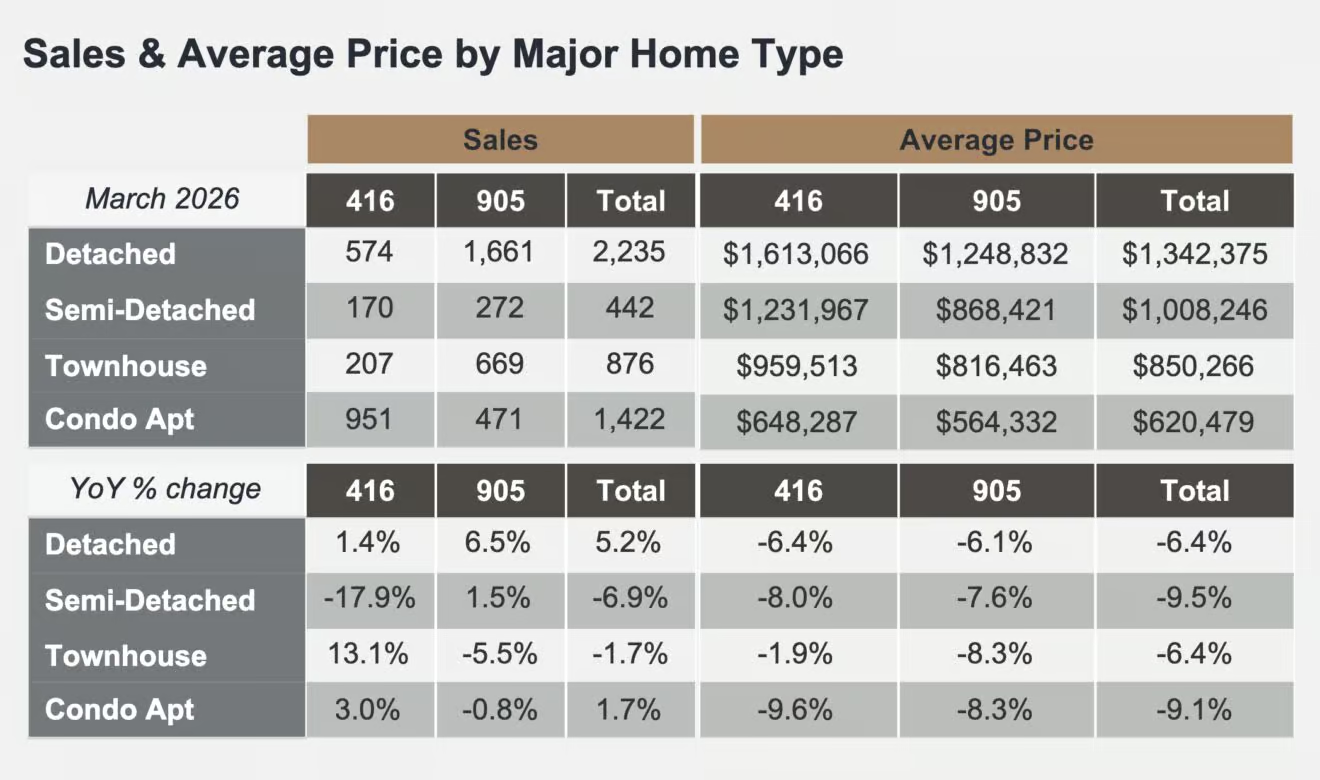
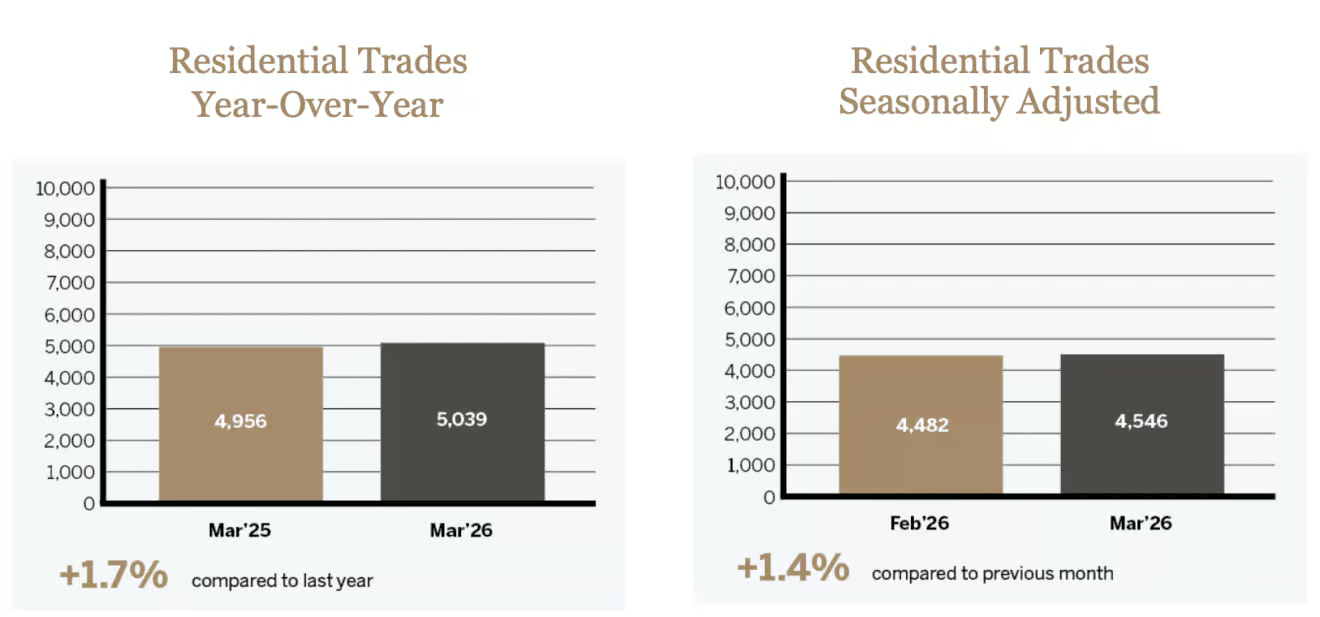
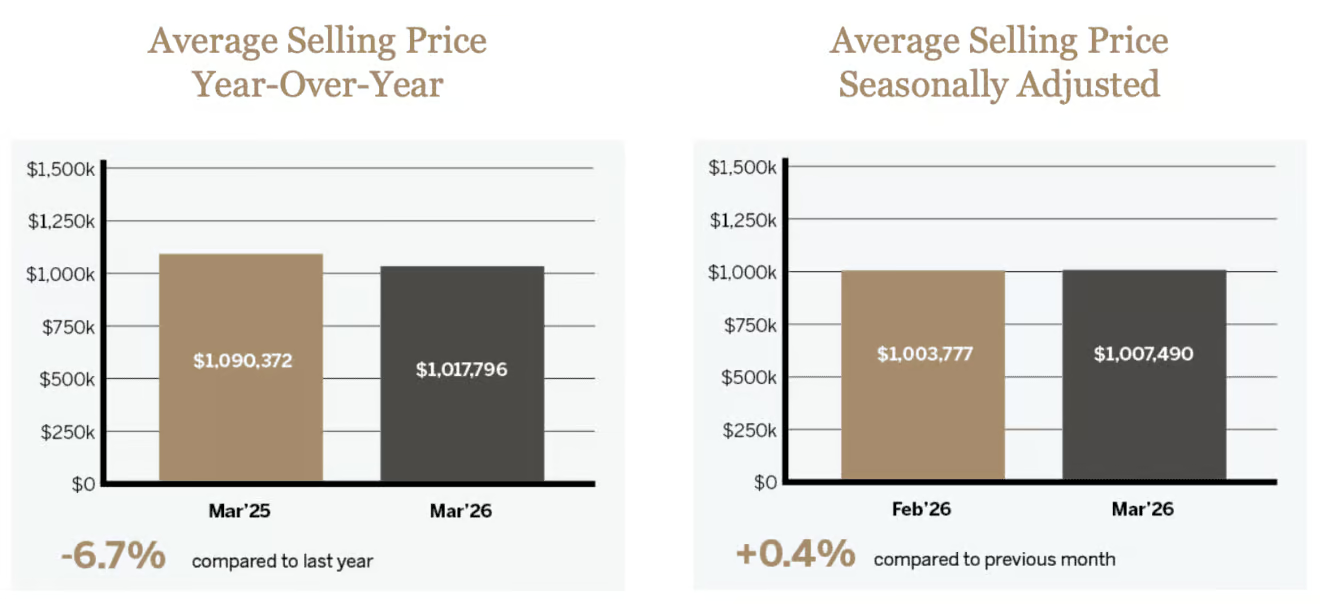
The latest from the Toronto Regional Real Estate Board data shows a market that is becoming more strategic:
- In March 2026, GTA home sales rose to 5,039, up to 1.7% from a year earlier
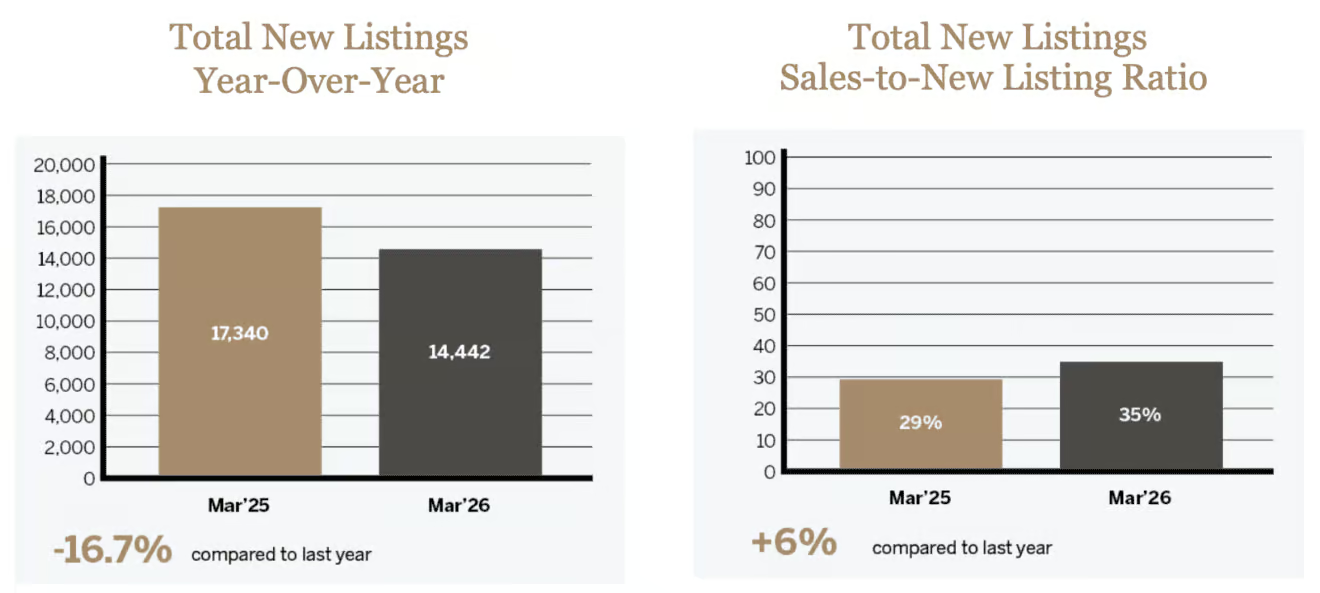
- New listings fell to 14,442, down 16.7% year over year
- The average selling price was $1,017,796, down 6.7% from March 2025
- The MLS Home Price Index benchmark was down 7.4% year over year
The key takeaway is that the market is no longer stalled, but it is still highly price-sensitive.
Buyers are active, but selective. Sellers who price accurately are seeing engagement, while those anchored to previous peak pricing are expecting slower results.
Financing Conditions: Improved, But Not Yet Easy
The Bank of Canada has held its policy rate at 2.25%, reflecting a balancing act between:
- Slow economic growth
- A softer labour market
- Persistent inflation risks tied to global factors
For Borrowers:
- Variable rates remain sensitive to rate decisions
- Fixed rates remain influenced by bond markets and global volatility
While financing has improved from peak conditions, it is not yet “easy.” Waiting for significantly lower rates is increasingly viewed as a low-certainty strategy.
The Bank of Canada’s next scheduled rate announcement is April 29, 2026, along with a new Monetary Policy Report.
For Buyers: Opportunity Exists — But it May Be Temporary
Buyers are currently operating in one of the more balanced environments seen in recent years.
- Prices remain below last year’s levels
- Competition is moderated by economic caution
- Negotiation opportunities still exist
However, this advantage is largely driven by hesitation in the market.
If confidence improves — whether through rate stability of economic signals — competition could increase quickly.
For Sellers: Strategy Over Timing
For sellers, success is being driven by execution rather than timing.
- Buyers remain value-driven
- Pricing accuracy is critical
- Presentation and positioning matter more than ever
The recent decline in new listings does provide a short-term advantage. Sellers entering the market now may benefit from reduced competition before additional spring inventory emerges.
Labour, Population & the Toronto Backdrop
Toronto’s housing market continues to be influenced by broader economic trends.
- Unemployment remains elevated (Canada: 6.71%, Toronto: 8.1%)
- Labour market conditions are described as “soft”
- Population growth has slowed significantly
Additionally, federal immigration policy is shifting toward reducing temporary residents, which may impact both housing demand and labour supply.
These changes suggest a more balanced demand environment in the near term.
Economic Environment: External Forces Still Matter
The Canadian economy is navigating:
- Modest GDP growth
- Trade uncertainty with the US
- Geopolitical risks
- Weakness in manufacturing
At the same time, housing starts in Toronto are down significantly, which could create supply constraints in future years.
This combination of softer demand today and constrained supply tomorrow is an important dynamic to watch.
Policy Updates Shaping the Market
Government policy is playing an increasingly active role in housing.Federal:
- First-time buyer GST/HST rebate (up to $50,000)
- New housing supply initiatives
Provincial (Ontario):
- Proposed HST relief on new homes (up to $1M)
- Housing-related legislation under review
Municipal (Toronto):
- Continued focus on increasing housing supply
- Development and planning initiatives
These policies are becoming more relevant to both affordability and long-term supply.
Key Deadlines & Practical Considerations
- Vacant Home Tax declaration deadline: April 30, 2026
- Ontario rent increase guideline: 2.1% (2026)
- New federal incentives for buyers are now active
Staying on top of these items is essential to avoid penalties and take advantage of opportunities.
The Bottom Line
This is a market that rewards preparation and informed decision-making.
- Buyers still have leverage — but it may not last
- Sellers can succeed — but only with strong execution
- Economic and policy changes are moving quickly
In this environment, waiting without a strategy can carry a real risk.
Let’s Talk Strategy
If you’re considering buying, selling, or exploring your options, the most effective approach right now is one that is proactive and tailored to your situation.
If you’d like a custom neighbourhood-level snapshot, a mortgage review, or insights specific to your property or goals — reach out today. I’m ready to provide you with clarity, strategy, and a steady hand through these shifting conditions.


Get Strategic Guidance
Whatever your needs—from navigating the luxury real estate market to solving commercial real estate problems—we guide you with proven strategy and objective advice.