

Fewer homes came to market in October, and the buyers who did act had real room to negotiate. Sales and prices were both below last year — but underneath those numbers, the market is quietly tightening.
October was a month of mixed signals, so the details tell you more than the headline does.
October Market Snapshot
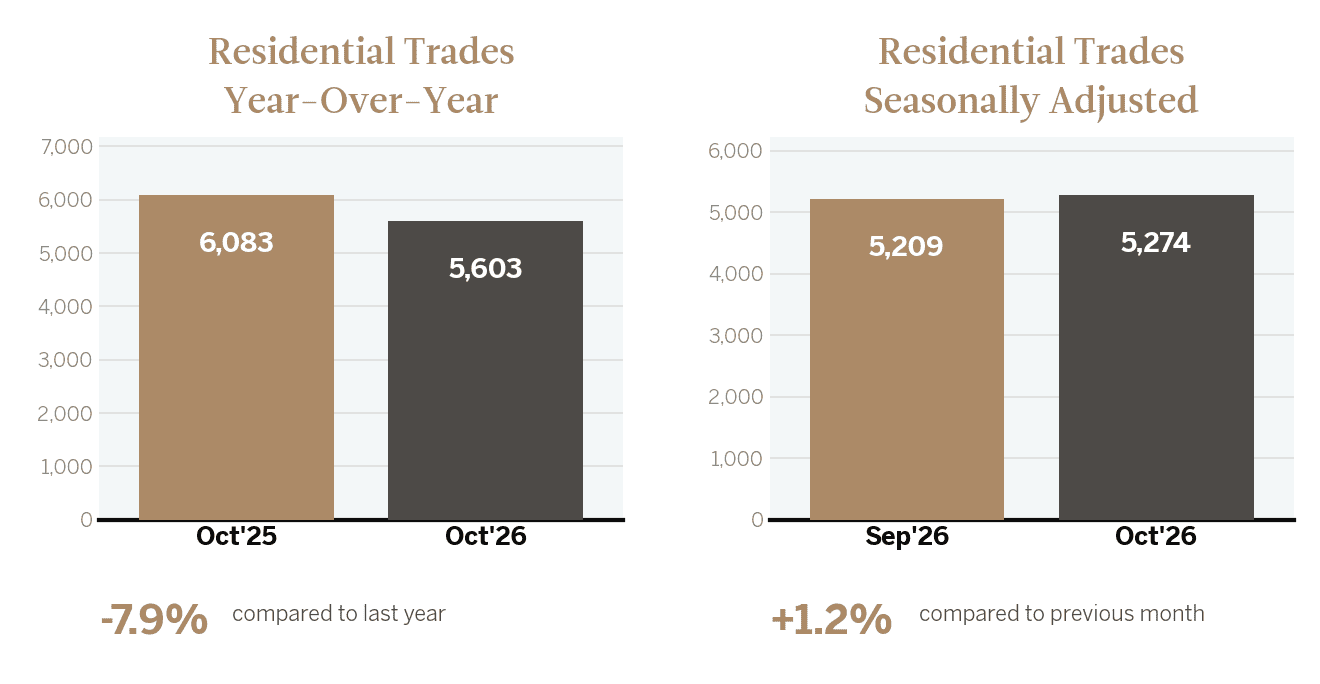
- Sales: 5,603 home sales through TRREB’s MLS® System, down 7.9% from October 2025. On a seasonally adjusted basis, sales rose 1.2% from September.
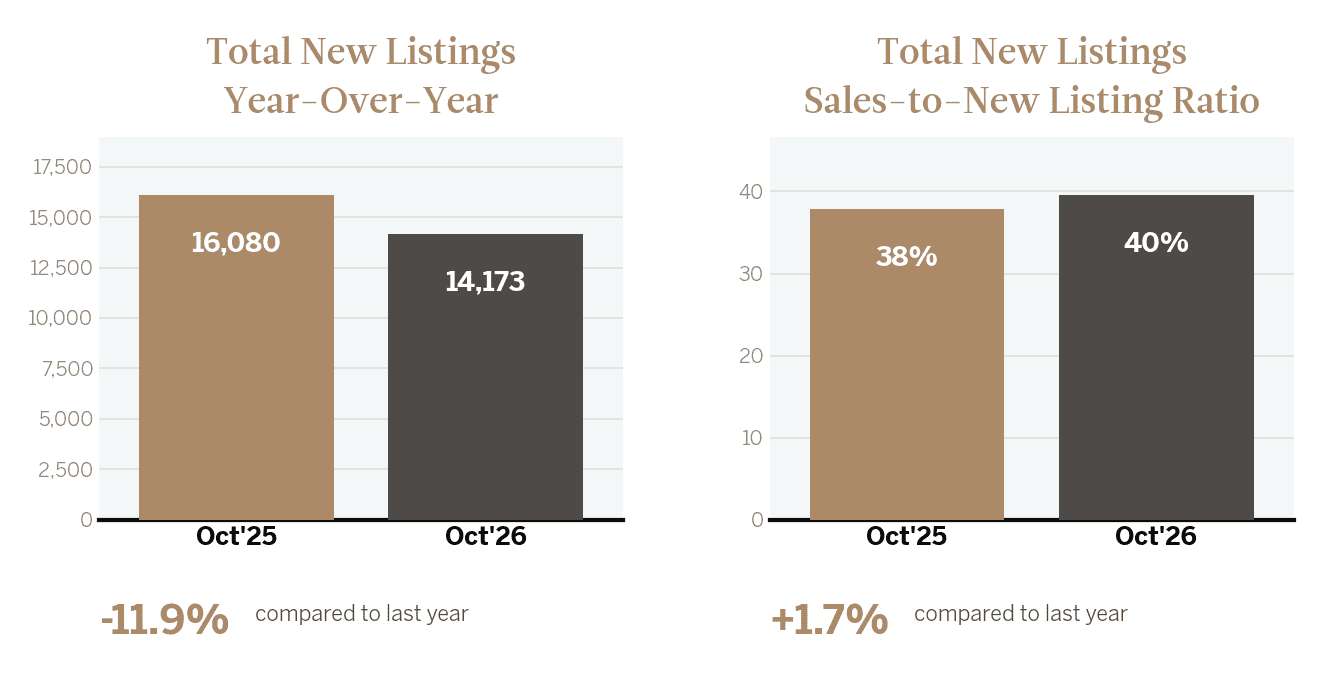
- New listings: 14,173, down 11.9% year-over-year.
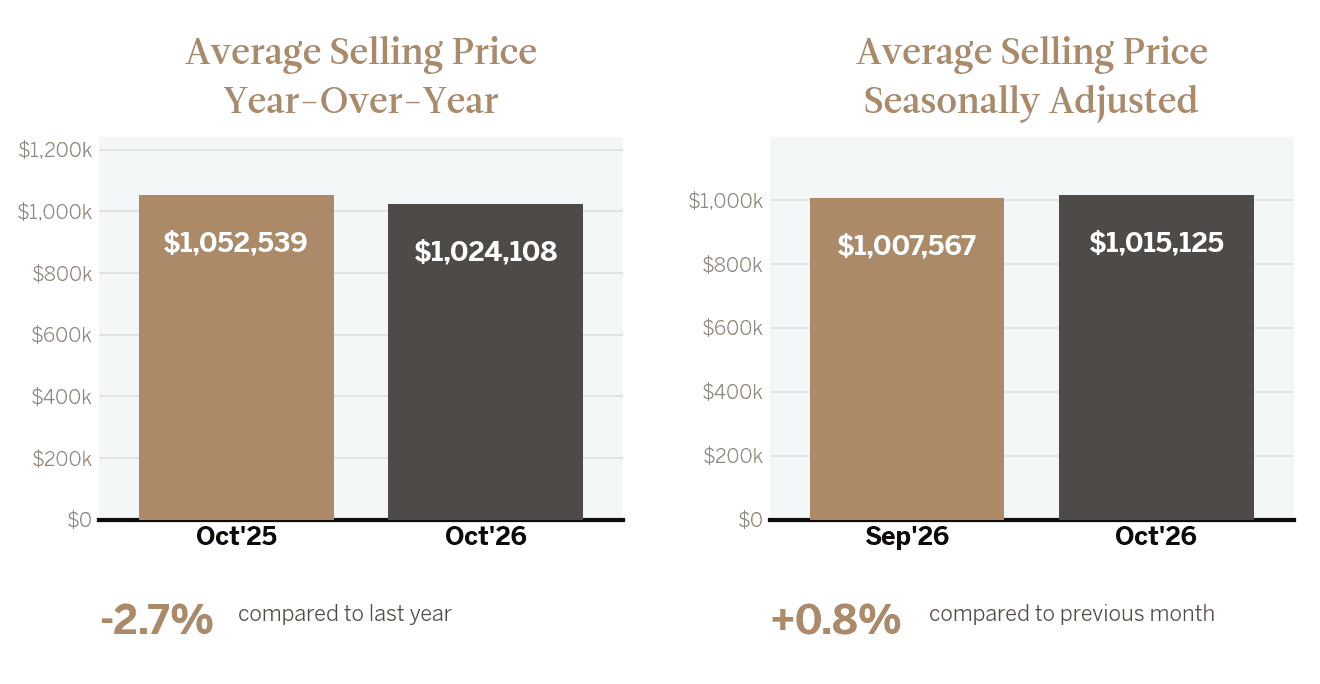
- Average selling price: $1,024,108, down 2.7% year-over-year.
- MLS® HPI Composite benchmark: down 4.3% year-over-year. On a seasonally adjusted basis, both the benchmark and the average price edged up from September.
- Inventory: 25,098 active listings at month-end, down 10% from a year earlier — roughly 4.6 months of supply at today’s pace of sales.
Key takeaway: Buyers still hold the negotiating power, but fewer new listings mean that window is starting to narrow.
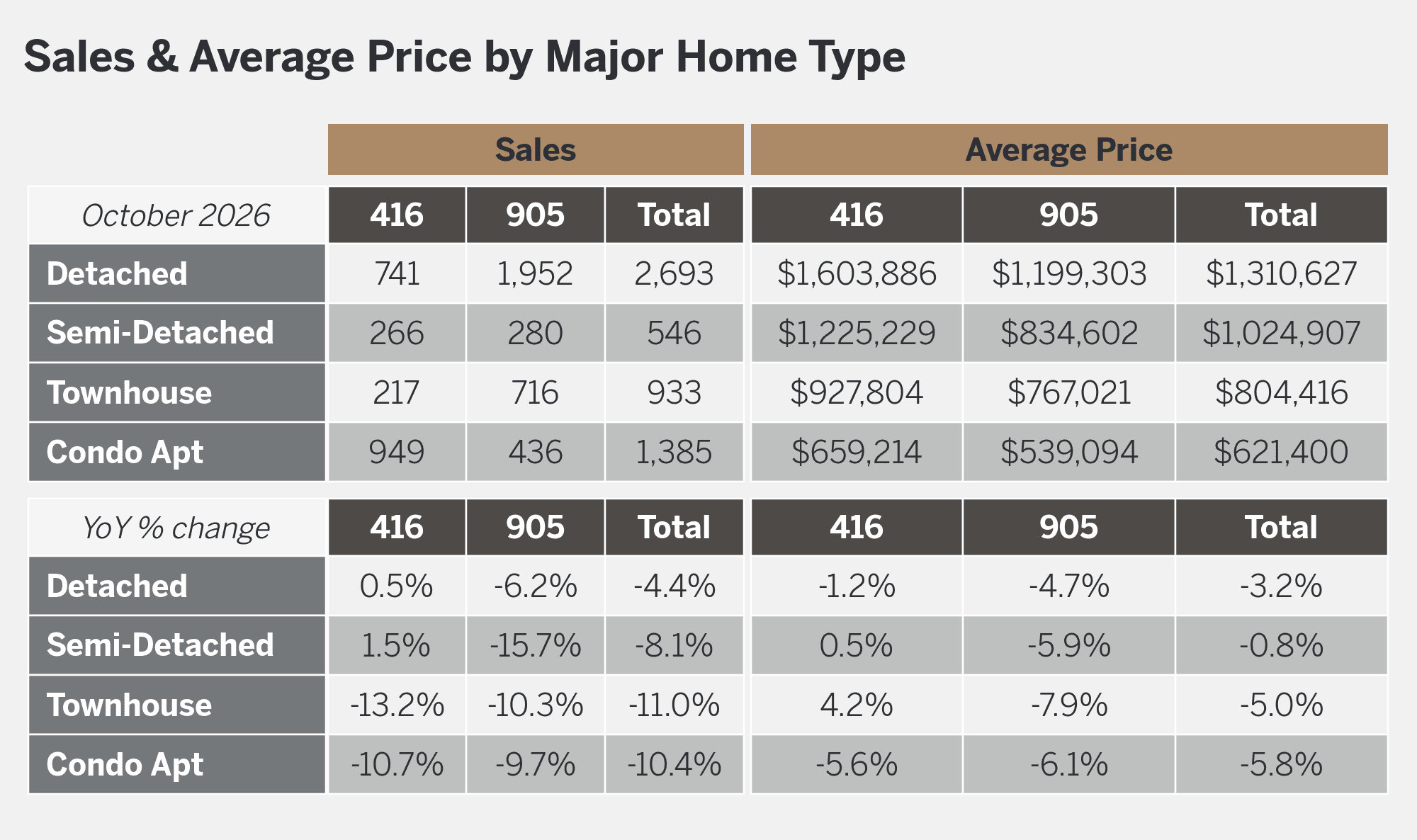
This Month by the Numbers
Financing & Rate Outlook
The biggest change this month happened at the Bank of Canada. On October 28 it raised its policy rate by a quarter point to 2.5%, its first increase in three years. Governor Macklem left the door open to further increases but set no fixed path. The next decision is December 9. Fixed rates had already been rising ahead of the hike, because bond markets moved before the Bank did.
For a buyer, the useful point is that higher rates have been partly offset by lower prices. TRREB notes that the monthly payment on an average-priced home is a little higher than a year ago, but still well below what buyers faced in 2023 and 2024. If you’re buying or renewing in the next few months, a rate hold now is cheap protection against another move in December.
What This Means If You’re Buying
This is a market that rewards buyers who are ready to act. TRREB says buyers continue to have considerable negotiating power in most segments. That suits first-time buyers who have been outbid before and investors who don’t need to sell first to fund a purchase.
First-time buyers looking at new construction have extra help. The federal first-time buyers’ GST/HST rebate became law in March, and Ontario’s separate rebate covers up to $80,000 of the provincial portion of the HST. Combined, eligible buyers could save up to $130,000 on a qualifying new home.
For condo owners hoping to move into a house, there is a specific opening this month. Townhouse prices fell about 5% year-over-year, to roughly $804,000, and TRREB points to townhouses and semis as the natural next step for buyers leaving condos.
A word of balance: with listings falling, the best-priced homes in popular neighbourhoods may not sit for long. Preparing now, before spring competition returns, is likely to pay off.
What This Means If You’re Selling
The good news for sellers is that there is less competition from other sellers. New listings were down nearly 12% and active inventory was down 10% from last year. TRREB notes conditions remain broadly balanced but are beginning to tilt slightly toward sellers. Low-rise sellers are best placed — semi-detached prices slipped less than 1% year-over-year, to about $1.025 million.
A word of balance for condo owners: TRREB says the condo segment is particularly well supplied, as recently completed projects add units to both the ownership and rental markets. If that’s you, pricing to today’s market and presenting the home well matter more than ever. A sale may also come in below your original plan, so it is worth building that into your numbers. Either way, the sellers who prepare carefully are the ones most likely to stand out as the market tightens.
Broader Context — Worth Watching
Jobs: Toronto’s unemployment rate was 6.9% in September, up slightly from August. The region added 11,300 jobs that month, mostly part-time. The October survey is due shortly.
Population and immigration: Canada’s population was about 41.8 million as of July 1, 2026, growing only 0.5% year-over-year. The current plan holds permanent resident admissions at 380,000 a year, and the 2027–2029 levels plan is expected imminently. TRREB’s CEO stresses that the region’s permanent population will keep growing, which supports longer-term demand, especially for rentals.
Trade and the economy: Prime Minister Carney says Canada–U.S. trade talks have intensified since his recent call with President Trump. TRREB’s president suggests that a trade deal, combined with an easing of the Middle East conflict, could restore confidence and bring buyers back heading into 2027.
Policy: Toronto’s three-government deal cuts development charges by up to 60%, which over time should help more new housing get built. The federal budget lands November 5 and is worth watching for any new housing measures.
Renters and landlords: Ontario’s 2027 rent increase guideline is 1.9%.
The Bottom Line
October was a pause, not a turning point. Buyers have leverage today, and fewer new listings suggest that leverage could start to narrow into the new year. Whichever side you’re on, preparation and strategy will matter more than timing the headlines.
If you’re wondering what these numbers mean for your home, your neighbourhood or your timeline, I’d welcome the conversation. Reach out directly and we’ll look at your situation together.


Get Strategic Guidance
Whatever your needs—from navigating the luxury real estate market to solving commercial real estate problems—we guide you with proven strategy and objective advice.